

Start building great scale models now!
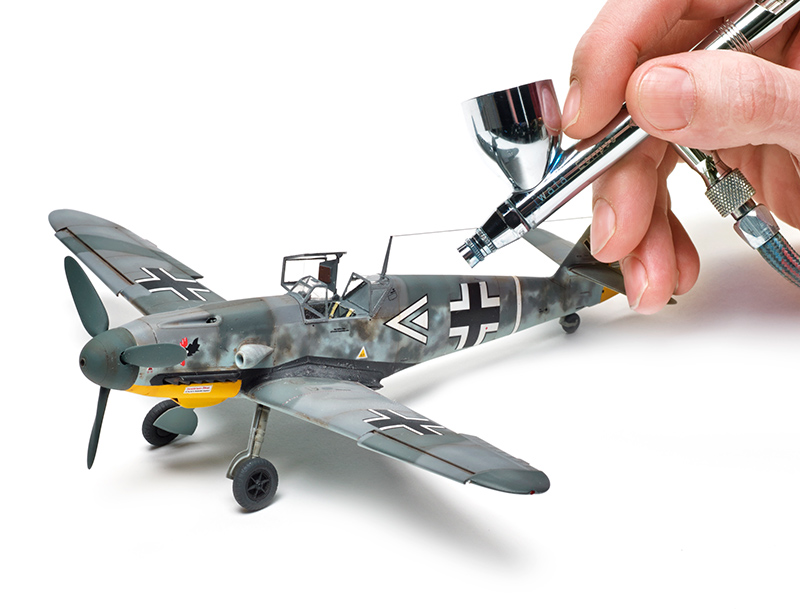
Take your scale model building skills to the next level with this four-part email series.
- Scale modeling basics
- Tools and supplies to get you started
- Fundamentals of good construction
- How to finish a model with paint & decals
You’ll find tons of useful tips and techniques from the experts, step-by-step how tos and more!
-

Tips for detailing a model car’s brakes
Modern disc brakes generate a good deal of dust and collect dirt. As such, I apply a gray wash to all my scale brake systems, even “showroom new” replicas. Also, brake rotors start to show rust after just a week or two of sitting unused, so a distant overspray of rust-colored primer might be appropriate.…
-

Achieve a realistic-looking, broken windshield
After test-fitting and final trimming, the windshield is ready to be glued in. Superglue is the way to go. I prefer Loctite 242 or 454, but any medium or medium-thick viscosity superglue will work. Do not use a thin superglue because it runs too easily. Work slowly. Now, I carefully shape the newly made windshield…
-

Fasten scale model parts with magnets
The pilot holes on the engine cover and tub were enlarged by hand with a #31 (0.12 inch) drill bit. These four holes (two on each side) were drilled to a depth of about 1/16 inch — the thickness of the magnets. I used a smaller drill than the 1/8-inch diameter of the magnet, so…
-

Cement clear parts with superglue without fogging
This is the final result, and the windshield and rear window have about as strong a bond to the body as they can without fogging. Superglue can also be used after initially setting the glass with another adhesive to add extra strength; this works with well-fitting windows you want to install permanently. Superglue isn’t always…
-

Paint a tattoo on a figure model
I then applied a second filter made from a lighter version of the skin color to create a highlight. I completed a few passes with lighter mixes each time. In this case, I added a bit directly onto the tattoo to lighten it. The tattoo looks too stark against the skin at this point. I…
-

Paint two-tone chrome wheels with black recesses
If you need to touch up the gloss color, apply just enough to cover the needed areas. When it fully dries, the gloss shrinks considerably and blends in. The final touch is Tamiya Metallic Gray (No. LP-61) for the center nut color. After the acrylic has dried to a uniform sheen, wet a paper towel…
-

Use light mapping to establish contrast on figures
I deepened shadows with Burnt Umber (No. SART-06) and then turned to painting the eyes and applied a white catch light with paint on the tip of a pin chucked in a pin vise. Next, I made more mixes using white, black, yellow ochre, and burnt sienna to refine the areas of light and shadow…
-

Build stronger landing gear and machine guns on World War I airplane models
Easily build a stronger machine gun You can replace a fragile 1/48 scale or 1/32 scale machine-gun barrel with brass rod, too. I don’t get too hung up on the diameter of the rod used, but I recommend you use the smallest rod that the muzzle of the gun can fit onto. Start by cutting…
-

How to paint realistic blonde hair
When you’re happy with how the hair looks, clear coat it to protect all your work before painting any other details in the hair, like hairpins, combs, or decorations. That way, if you make a mistake, you can clean it up without affecting your previous work. As the last step for blending, I mist Golden…
-

Fabricate a contoured, flush-fitting car window
Quickly remove unwanted raised details with a sanding block and wet, 400-grit sandpaper. Follow up with 600, 1200, 1500, and 2000 grits and then with 3200 through 12000 polishing cloths or sponges. At this point, the window fits well, but it’s tighter than I want. You need to make sure you have enough room for…